A Practice in Formation
What our On The Rise exhibition taught us about designing not only buildings, but architectural practice itself.
The 2025 Young Architect Award gave us an unusual opportunity: rather than simply assemble a retrospective of completed work, we could step back and ask what actually connects the projects, roles, and ideas that have shaped Lo Design since the studio was founded.
The answer was not a building type, an aesthetic, or even a particular scale of work.
It was practice itself.
Designing the Way Architecture Gets Made
Architects are taught that we shape cities. That is true, but only partially.
Buildings emerge from a much larger network of decisions involving financing, development, ownership, politics, community engagement, approvals, construction, and long-term operations. Many of the decisions that ultimately define a project are made long before an architect begins drawing construction documents.
That realization has shaped Lo Design from the beginning.
We founded the practice as an experiment: What happens when architects participate in more of those decisions? What if we become developers? Builders? Owners? What changes when we remain involved after the ribbon cutting and have to operate, maintain, and steward the places we design?
The goal has never been to simply become more things.
It is to become better architects by expanding the places where architects have agency.
One phrase in particular has stayed with us:
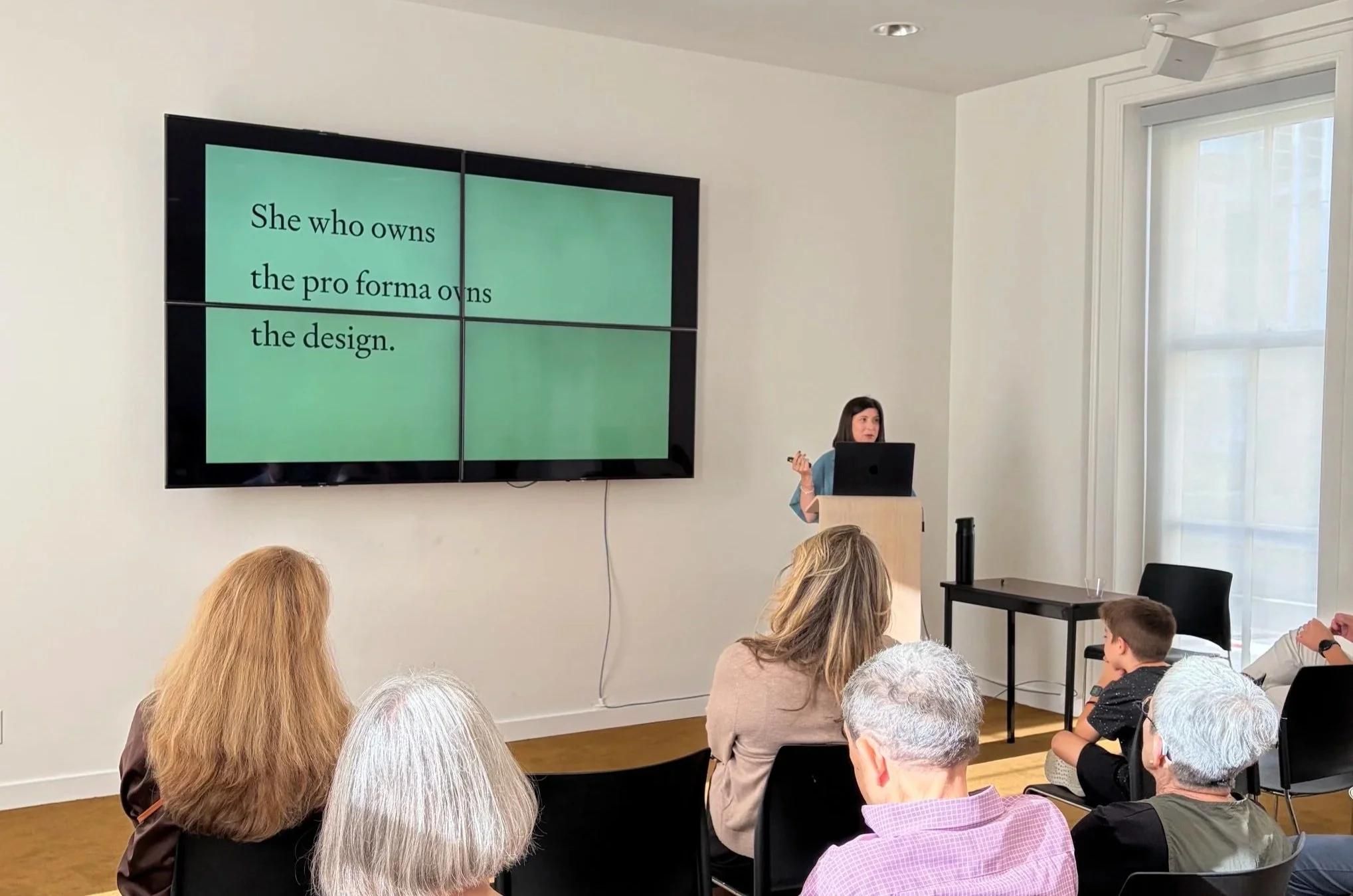
She who owns the pro forma owns the design.
On its surface, it sounds like a development maxim. For us, it has become something larger: a statement about understanding the forces that determine what gets built in the first place.
Five Ideas, Rather Than Five Building Types
When we began organizing the exhibition, we found that the projects we wanted to include were connected less by program than by recurring principles.
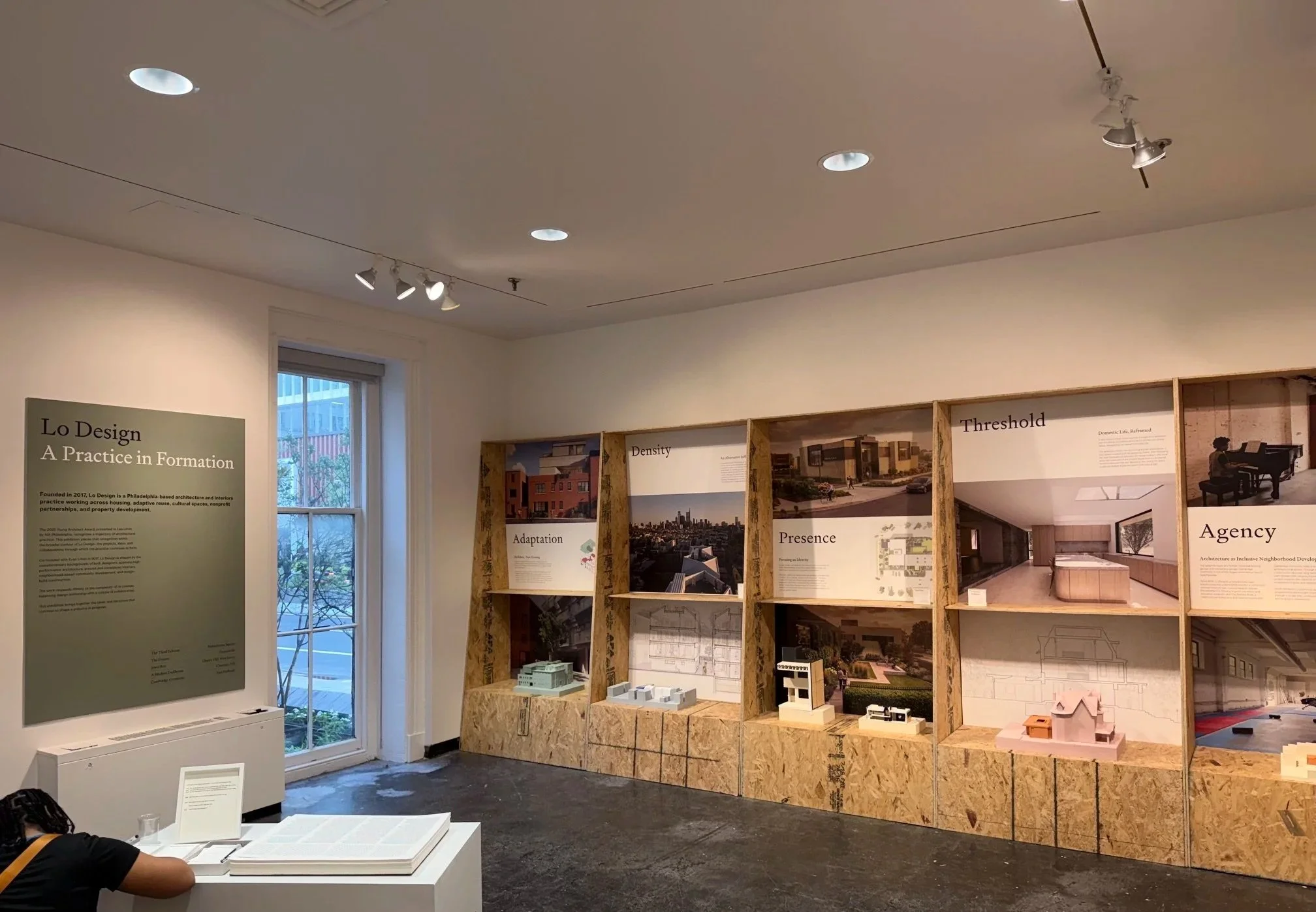
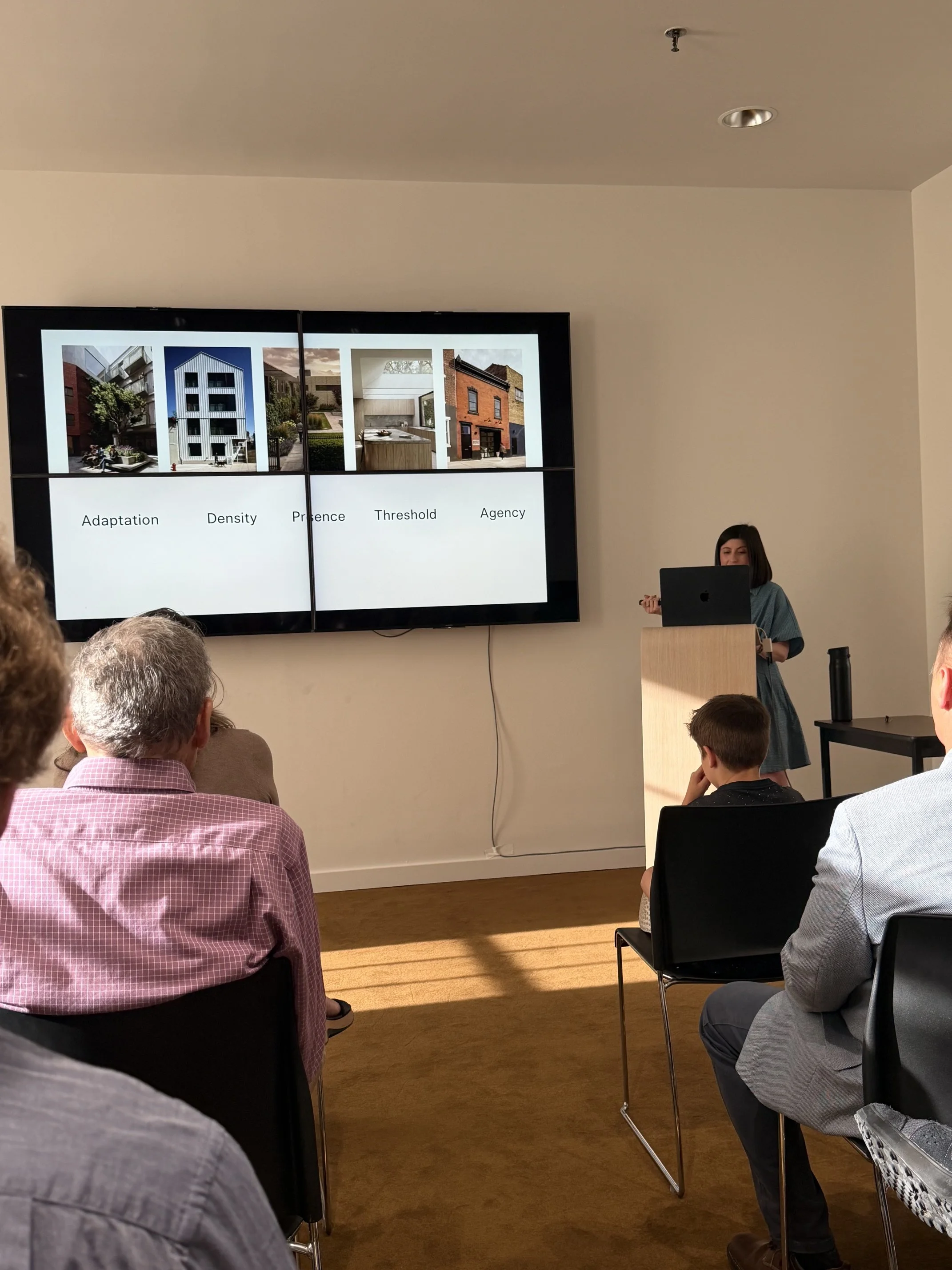
Adaptation. Density. Presence. Threshold. Agency.
The exhibition paired each idea with a project that allowed us to examine it at a different scale and from a different position within the development process. The presentation itself intentionally placed these five terms alongside radically different projects—from adaptive reuse and infill housing to residential interventions, retail, and community development.
Adaptation is represented through The Third Edition, where our role began before there was a traditional architectural commission. We identified an underutilized historic office building, developed a concept for its conversion to housing, secured conceptual historic approvals, and ultimately connected the opportunity with an existing development client.
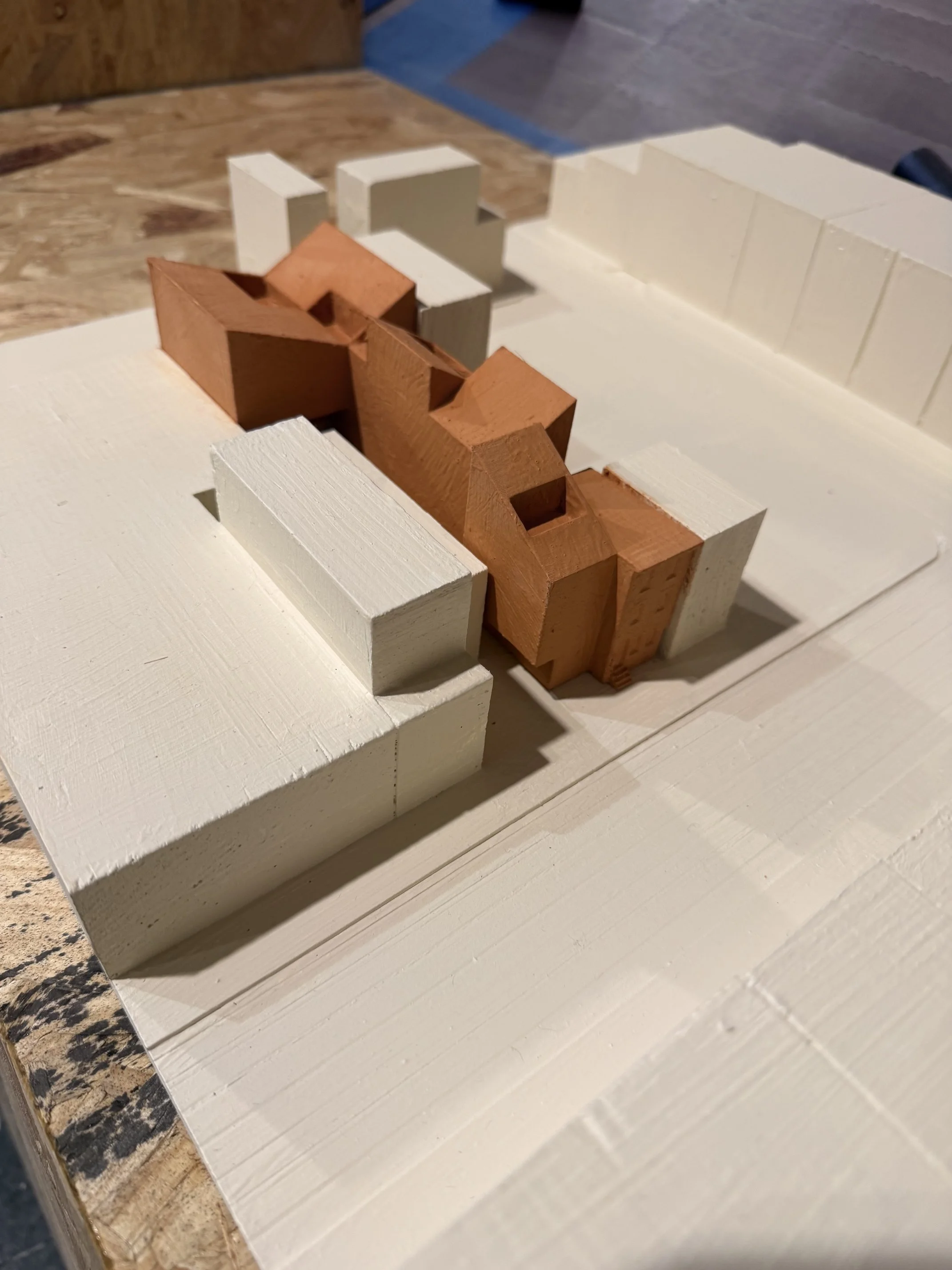
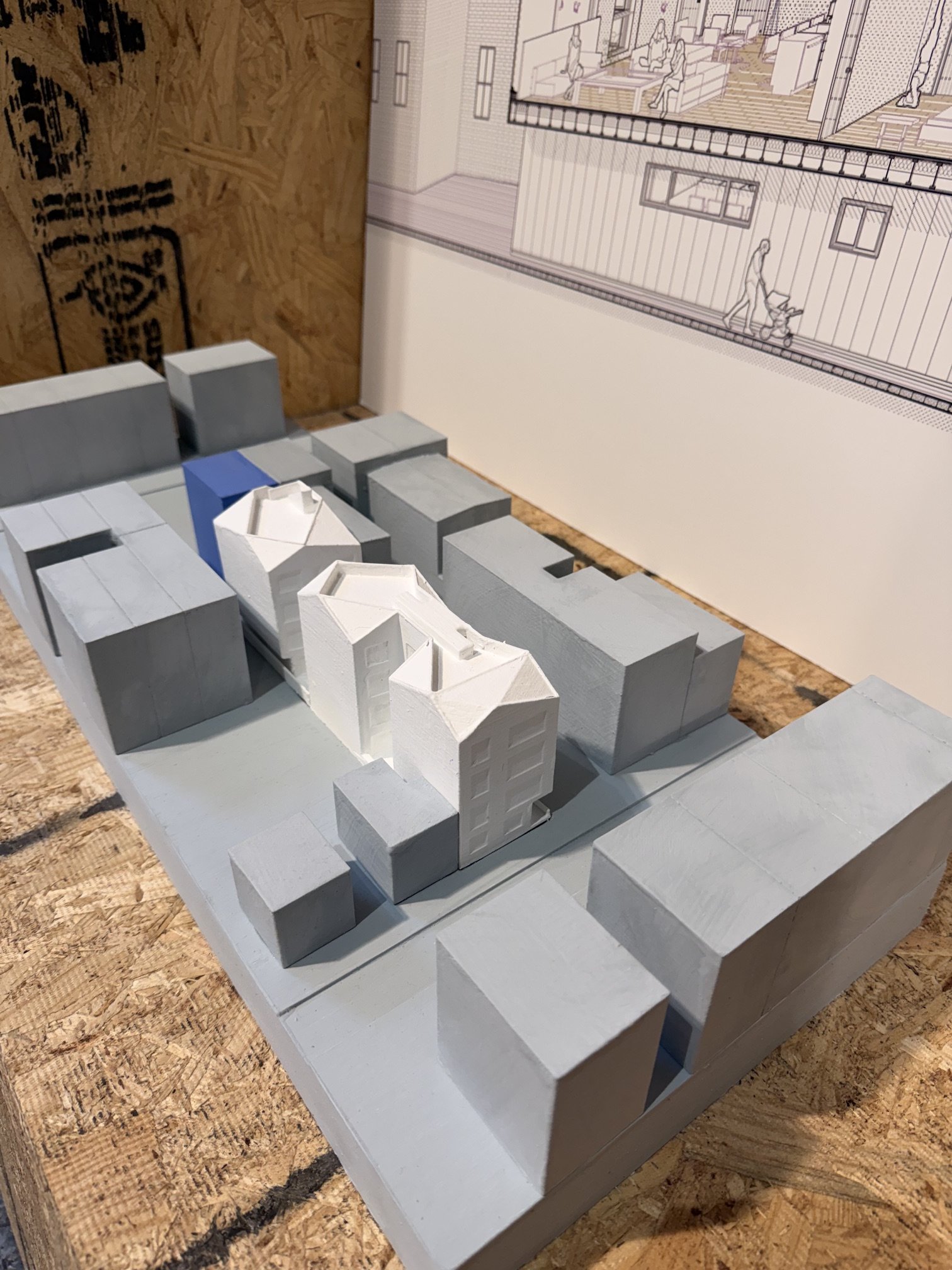
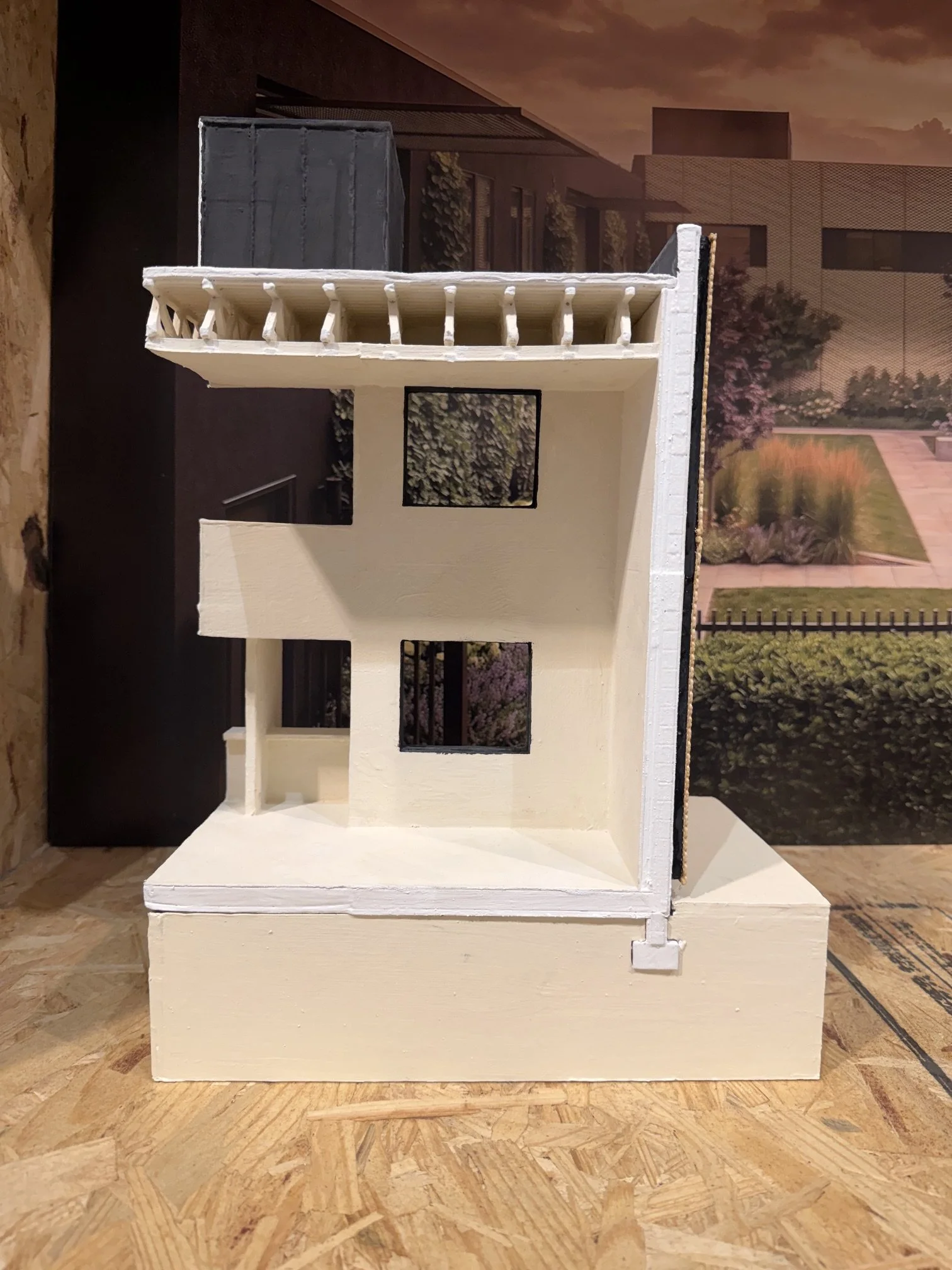
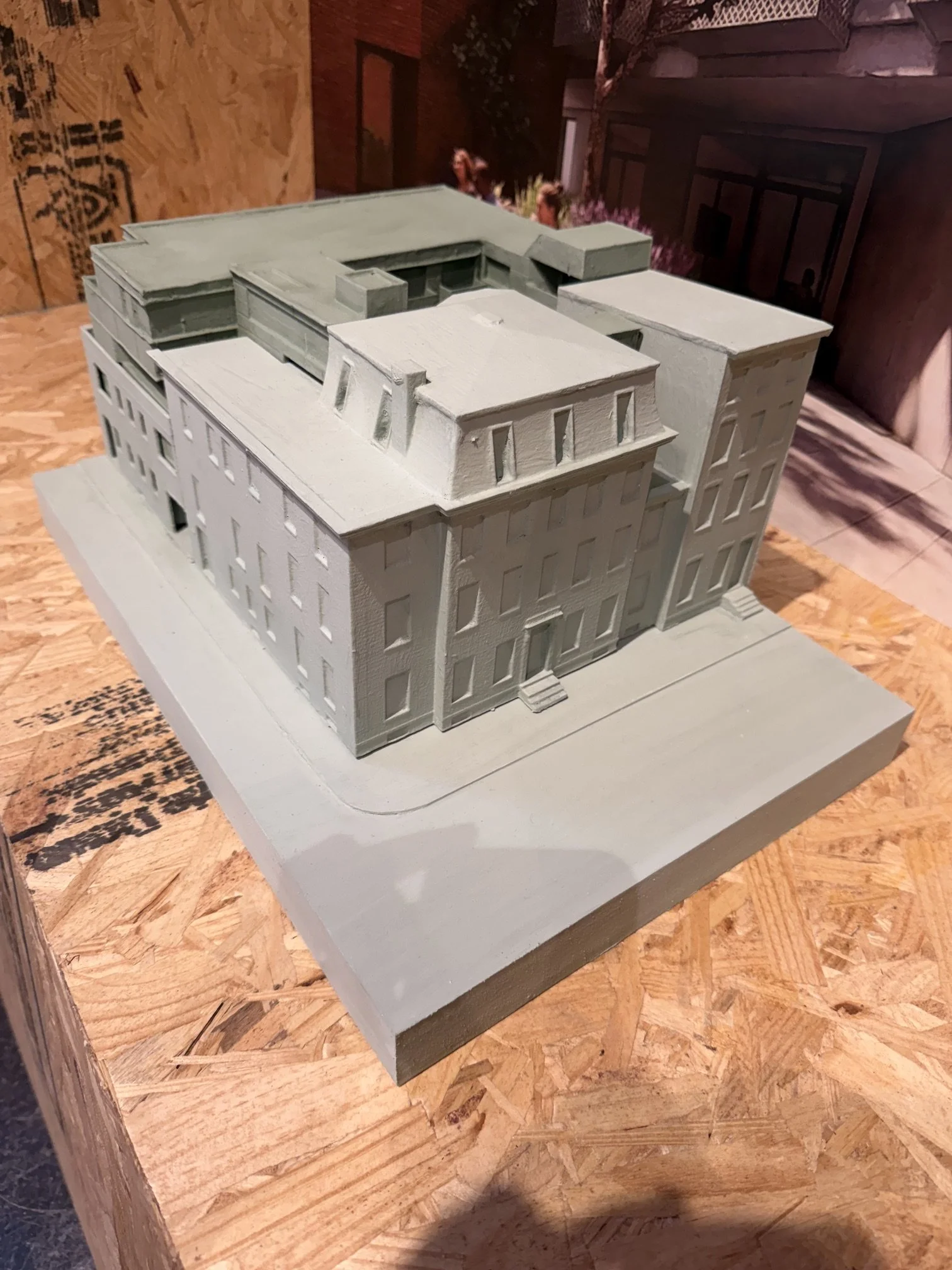
Density, explored through The Francis, is not simply a question of adding units. We think about density as an opportunity to create more relationships: shared courts, pathways, infrastructure, and spaces of encounter. The project preserves an existing historic brownstone while introducing new housing into what had been an oversized, underused rear yard.
Presence asks what architecture communicates before someone enters a building. In the Jewel Box, two vacant 1970s office buildings are being transformed into a highly visible retail environment—using architecture to establish identity rather than simply contain program.
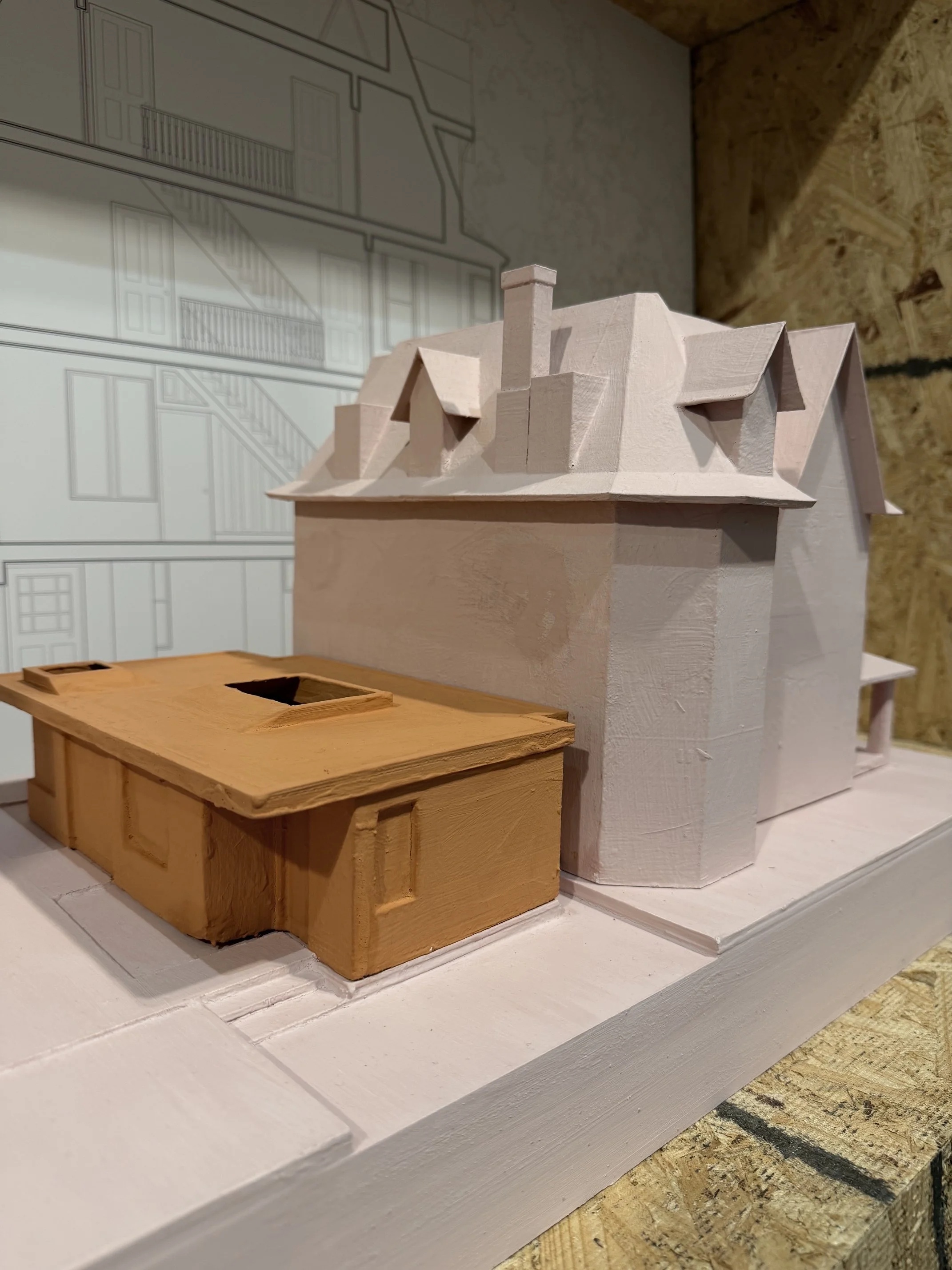
Threshold is explored through the Modern Dollhouse, an addition to a historic stone house in Chestnut Hill. The project is deliberately about the transition between old and new—a recurring condition in our work, whether the threshold is historic and contemporary, public and private, or existing and newly constructed.
And then there is Agency, the idea perhaps most fundamental to the way we think about practice.
At Cambridge Commons, Lo Design operates not simply as an architect working for a client, but through overlapping roles in ownership, development, design, construction, partnership, and long-term stewardship. The project asks what changes when an architect becomes a neighborhood partner rather than a consultant—and when a project can be initiated because we believe it should exist, rather than because someone has already commissioned it.
Architecture as a Broader Practice
One of the central arguments of the exhibition is that expanding the architect’s role can also expand access to design.
Our work ranges from private residential projects to nonprofit, community-based, and pro bono work, but we do not believe those categories warrant different standards of design. The same rigor, ambition, attention, and critique should apply across all of them.
As the exhibition presentation states, “Rearranging traditional architectural roles makes design more accessible—especially with populations and communities that have long been underserved.”
That proposition is important to us because agency is not an end in itself. More control over the process only matters if it allows architects to produce better outcomes, advocate more effectively, initiate projects that otherwise may not happen, and bring thoughtful design into places where conventional models of practice have failed to deliver it.
Still in Formation
We called the exhibition A Practice in Formation intentionally.
Lo Design is not intended to represent a finished model of architectural practice. We are still testing ideas, taking on new roles, learning where integration creates value—and where it creates complications—and reconsidering what an architecture practice can reasonably encompass.
The exhibition is therefore less retrospective than proposition.
What if architectural practice itself is a design problem?
If architects are willing to rethink the structures through which our work gets made, our greatest opportunity may not simply be to design better buildings.
It may be to build better ways of practicing architecture.